
Five builds since September 2025.
Each one fixed something the last one showed us. Next is the full pack.
What each build taught us.
-
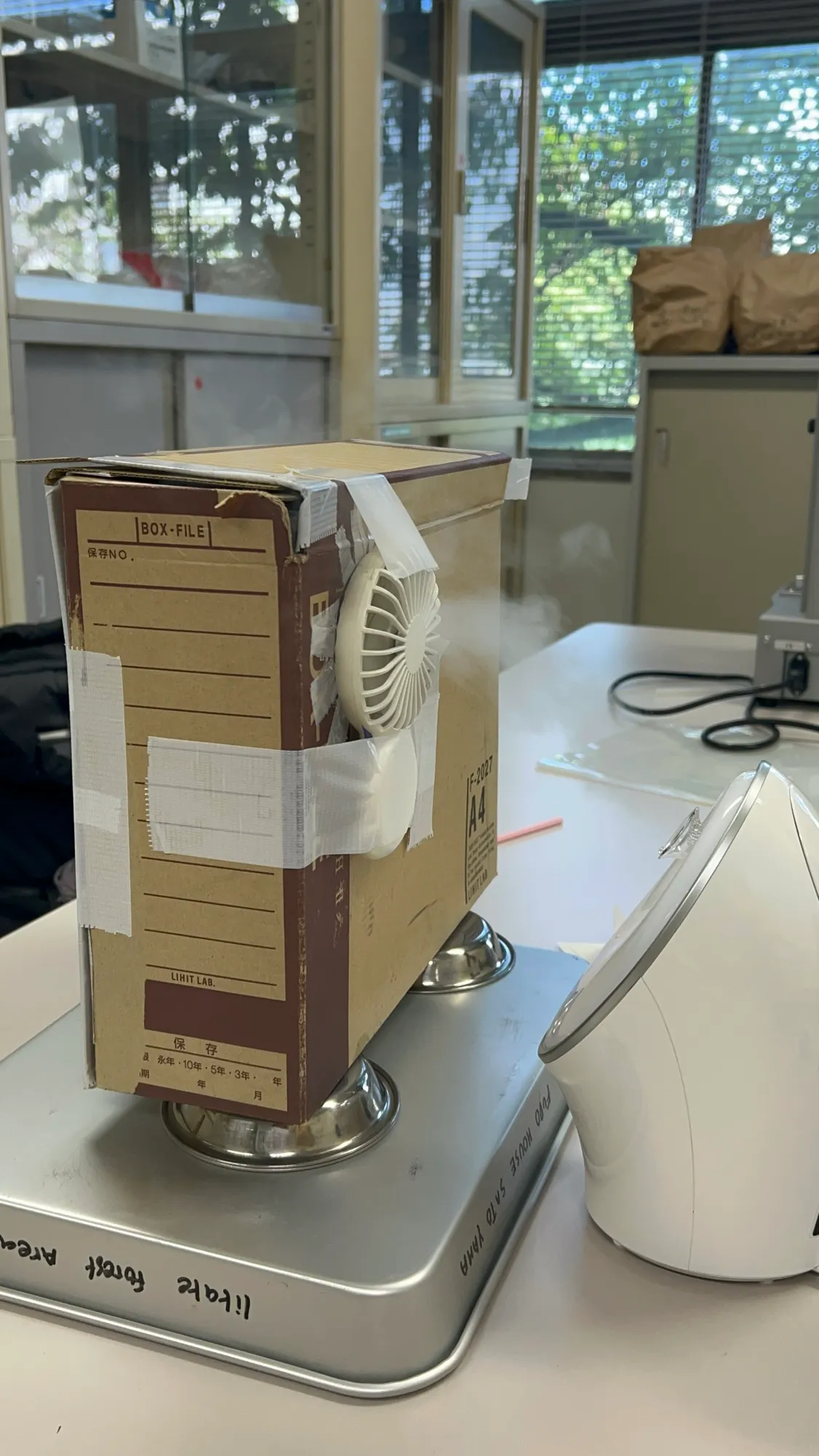
P1A cardboard box
What we built
A cardboard box, a small fan and a bumpy surface for drops to form on. Nothing cooled it.
What we learned
Drops do form on the bumps. But the cardboard soaks them up. Next: a box that stays dry, and a way to cool it.
-
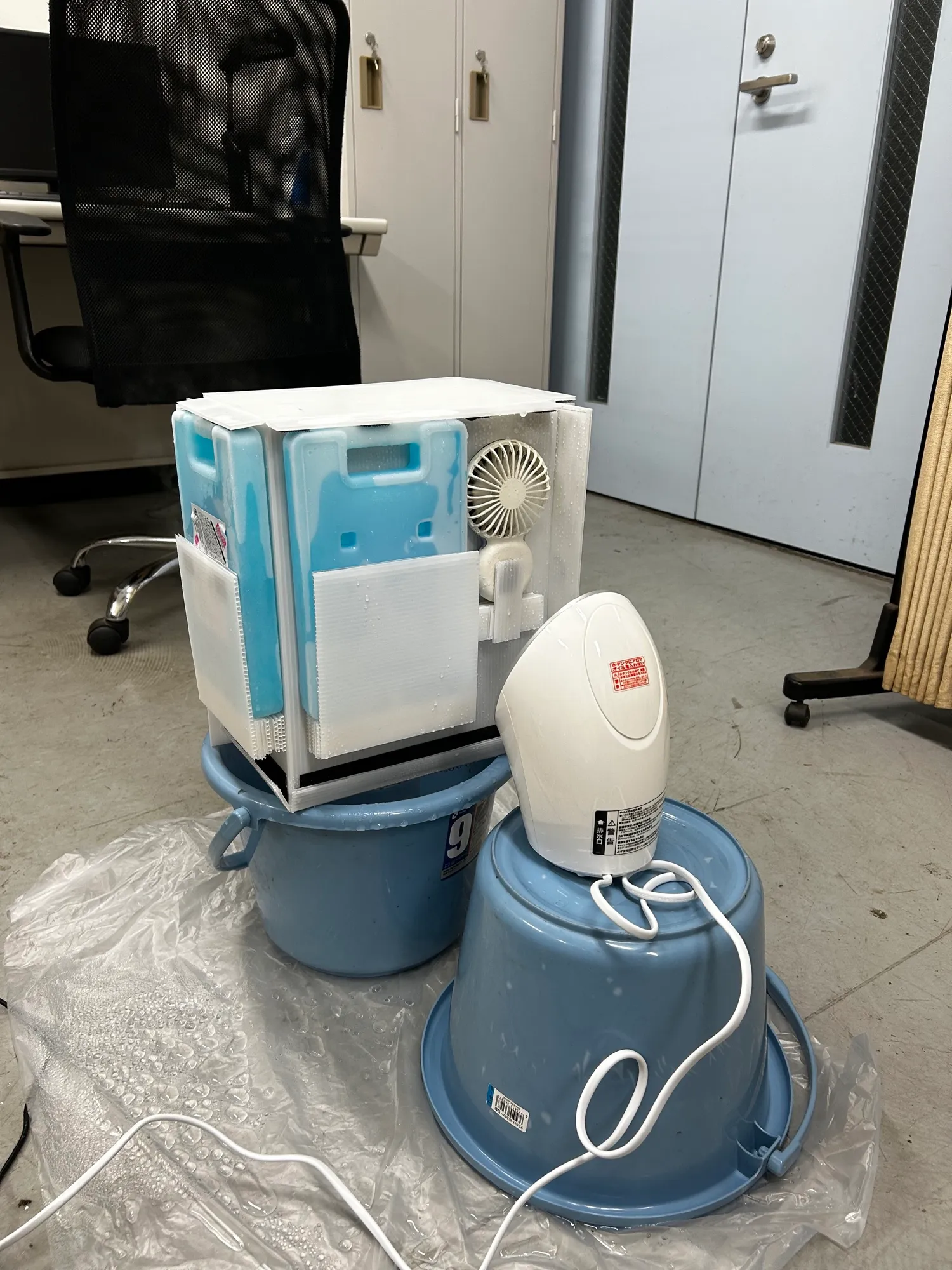
P2We added cooling
What we built
A white box with a cooler inside. We ran it beside a humidifier.
What we learned
Cooling makes a big difference. But a humidifier makes the test too easy, so since then we use ordinary room air only.
-
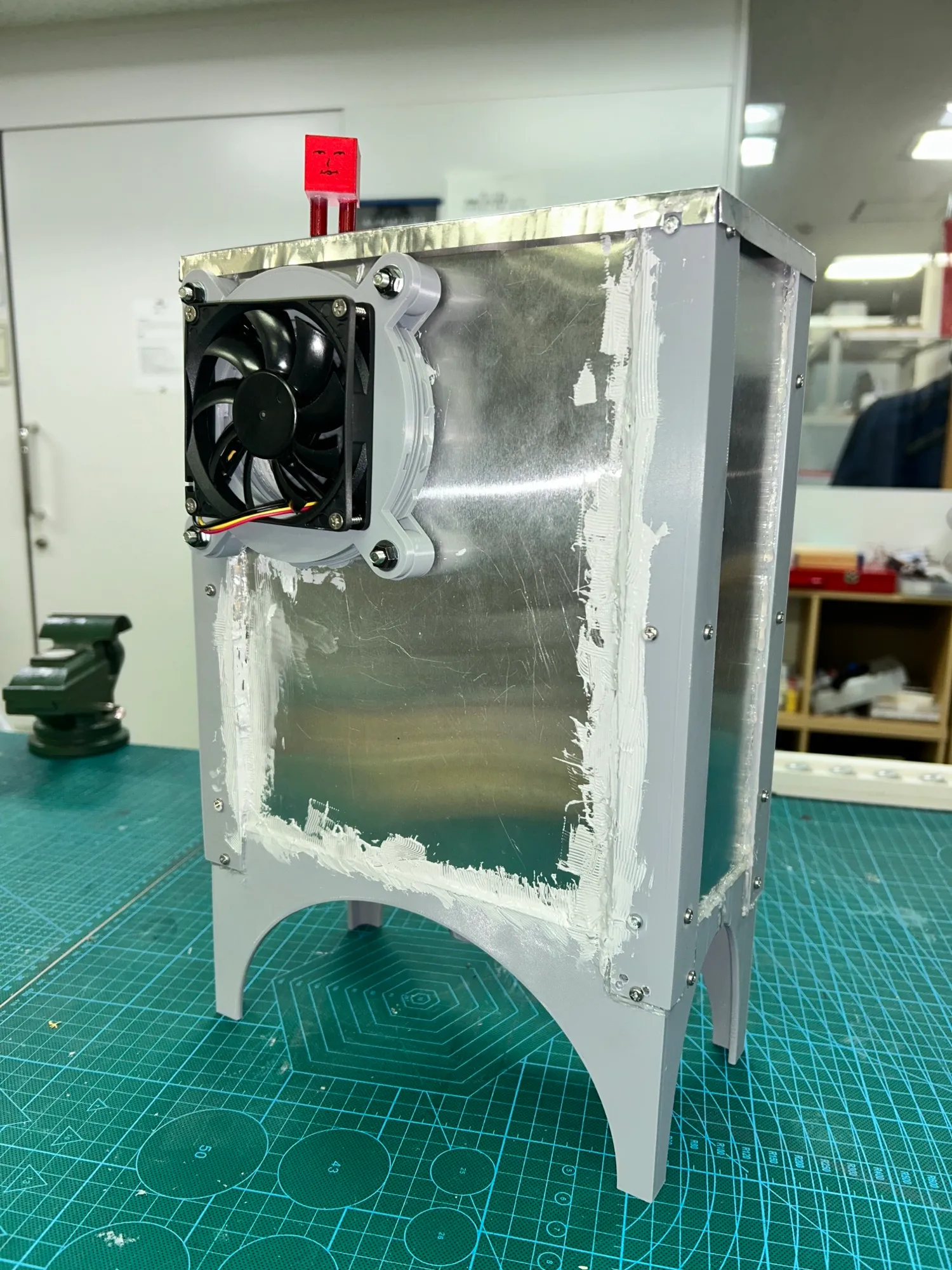
P3We steered the air
What we built
A metal panel in an open frame, with a fan pushing air across it.
What we learned
How the air moves matters as much as the size of the panel. Next: close the box and cool it harder.
-
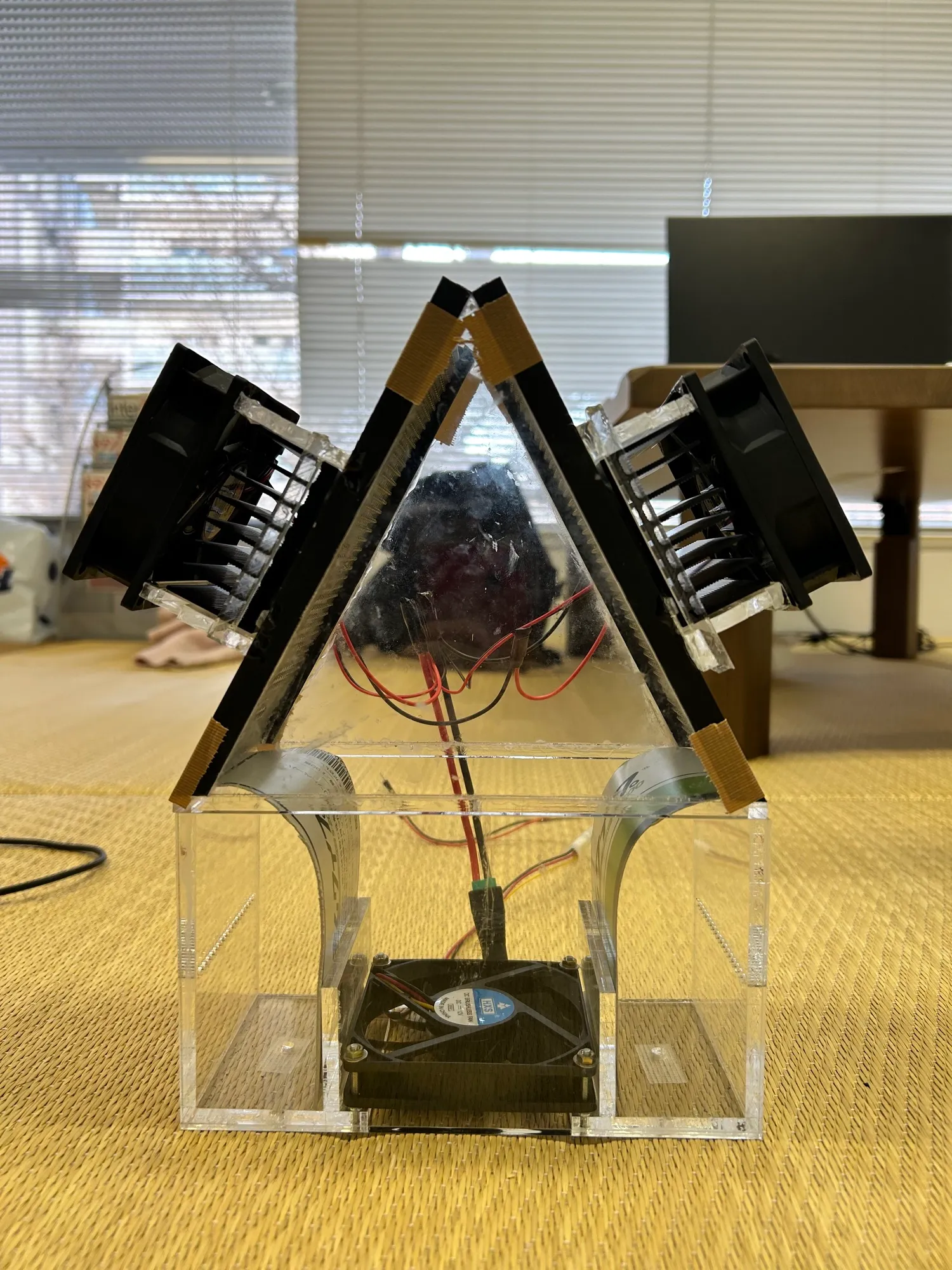
P4A closed box
What we built
A clear, closed box with two fans and our own cooling parts.
What we learned
The cooling parts seem to trap heat on one side, and that holds the cooling back. Getting the heat out is the main thing to fix.
-
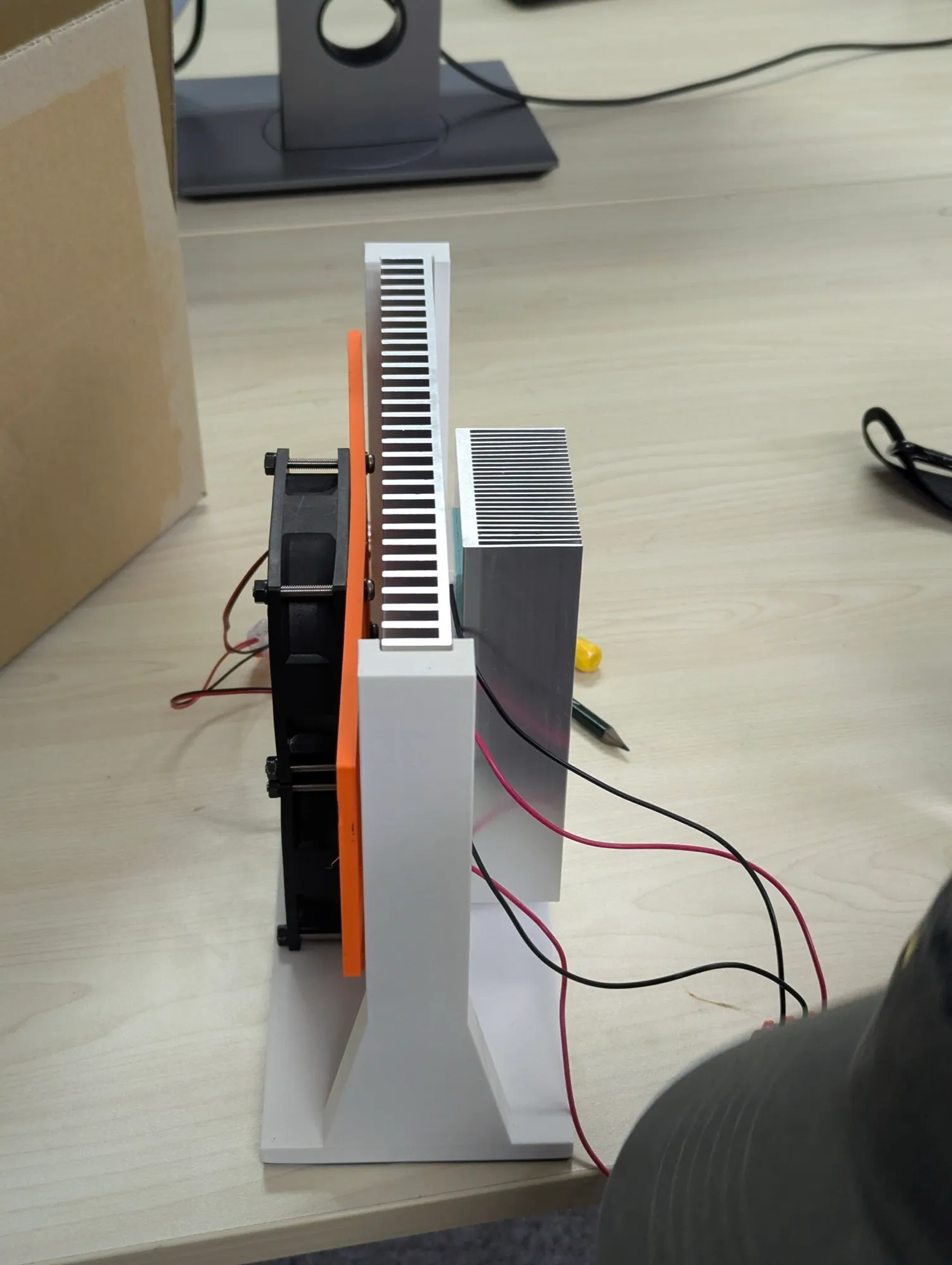
P5Built to lose heat
What we built
A new frame, a big heatsink (metal fins that carry heat away) and a new panel for the drops. It weighs about 2 kg.
What we learned
Our best build so far. We also tried a coating on the panel, and cannot yet say if it helps.
What comes next.
Now
P5 works on a lab table.
It pulls water out of ordinary room air.
Next Needs funding
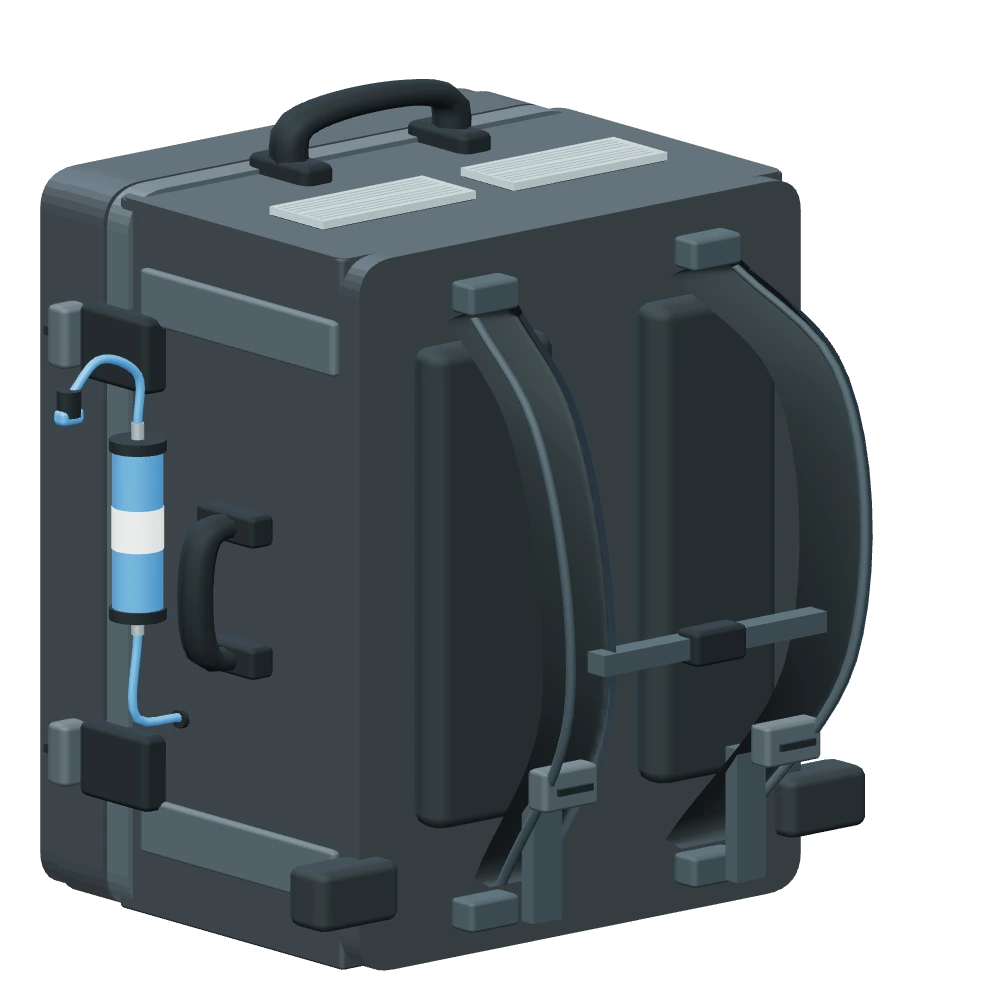
Build the full pack.
Everything in one case you wear. Pick a part to see it.
Then
Test it where we control the air.
- How much water it makes
- How much power it uses
- The same test, many times
Then With pilot partners
Test the water. Take it outside.
- A lab checks the water
- A first trial outdoors, with a partner