
Water starts in the air.
We are building a backpack that collects it. Here is how it works, and what we are building it to do.
Follow the airAir flows over two cold panels.
Humid air comes in through the front of the case, passes over a cold panel in each module, and leaves through the top.
Below the dew point, the water in the air turns into drops, like on a cold glass in summer. Carrying the heat away is the main limit today.
Front vents Cold panels Top vents
Drops run into one shared store.
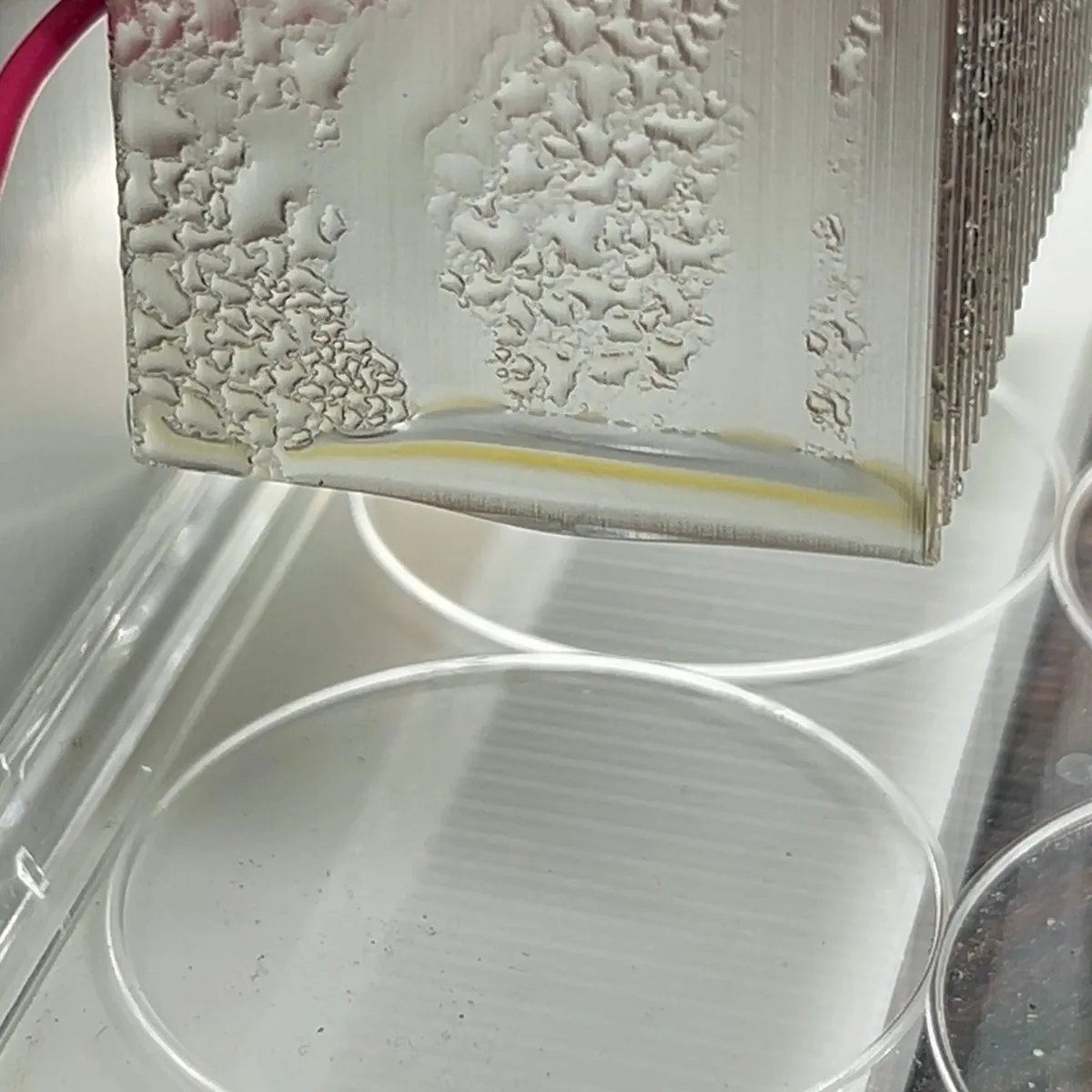
Drops form on small dimples on each cold panel, an idea borrowed from a desert beetle’s back. They run down into a tray, and both trays feed one water store at the bottom of the case.
Cold panels Trays Store
Out through a filter outside the case.
Water leaves the store through a low outlet and passes an inline filter on the side of the case, where it is easy to reach and change.
The water itself has not been tested yet.
Store Filter Tube
A battery inside, solar outside.
A battery in the case runs the modules, fans and controls. A folding solar panel, carried separately, charges it.
Next: what we are aiming for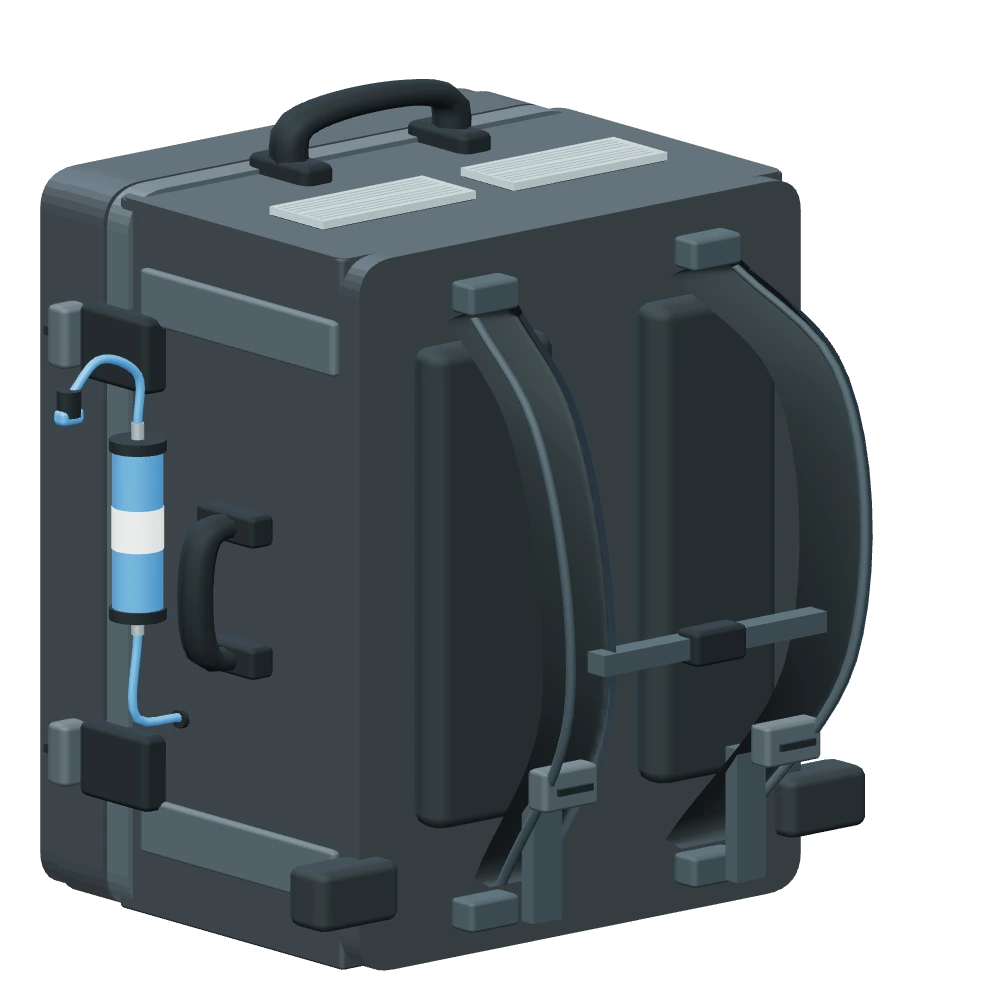
Our target: more water for every kilogram you carry.
How much is enough depends on the pack. So we judge every build by one rate: the water it makes, for the weight you carry and the power it uses.
How we judge every build
-
More water. Two modules side by side, and a new heat path to keep the panels cold.
-
Less weight. Everything in one case, with one shared water store.
-
Less power. So a folding solar panel can keep up.
Why weight matters
Days away from a tap
3days
9kg
of water to carry
That is 3 litres a person a day, the amount Japan asks every home to store. Every litre the pack makes is a kilogram you do not carry. Prime Minister’s Office of Japan (opens in a new tab)